
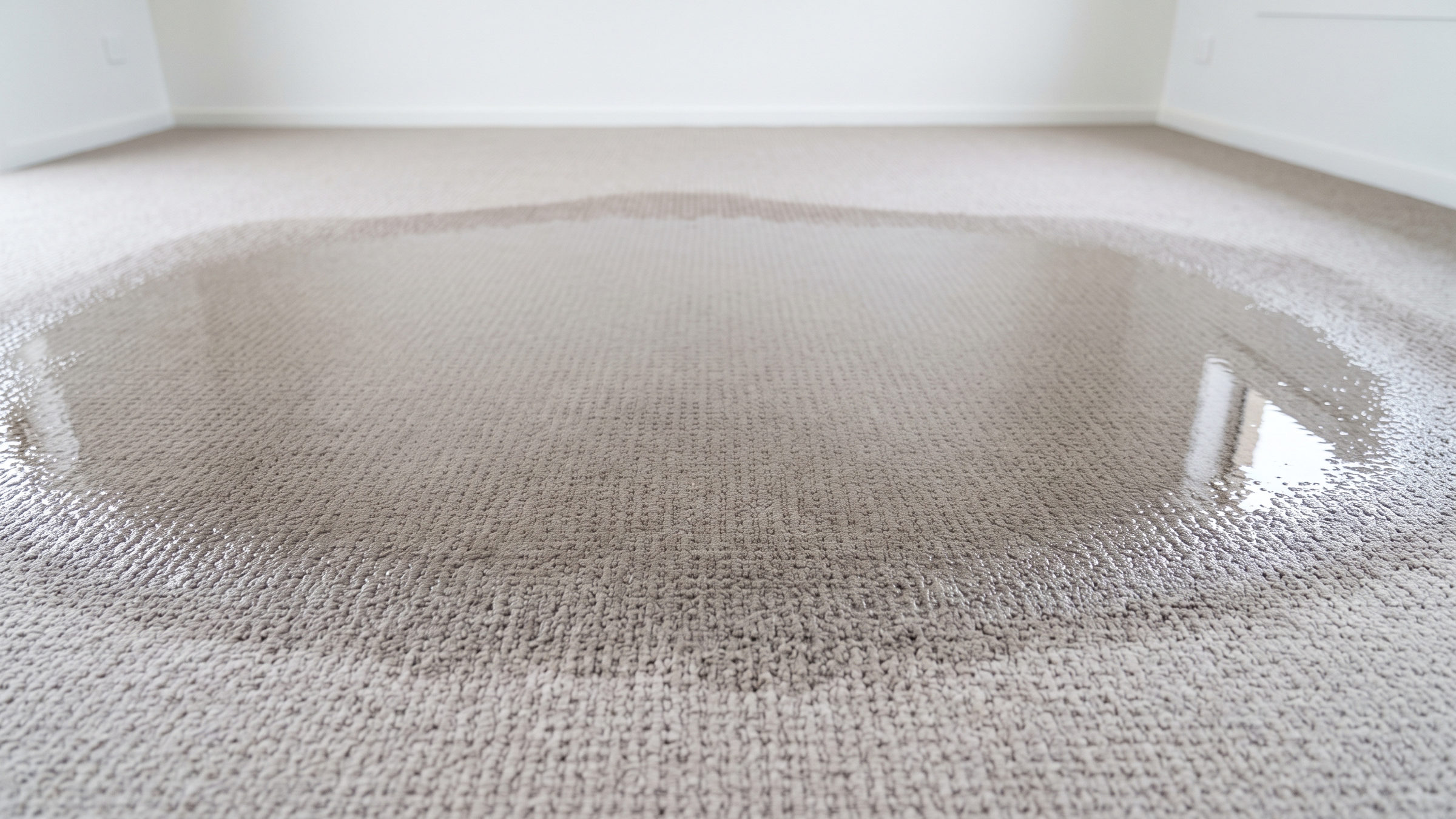
Carpet Flood Damage: What Floodwater Does, and What Can Be Saved
This article is for general information only and isn't specific advice. Every water-damage situation is different — for your circumstances, seek professional guidance.
When water comes through the house from a storm, an overflow, or rising water from outside, it's a different problem to a clean burst pipe. Floodwater is dirtier and it spreads further — and that changes what can be saved. Here's what flood damage actually does to a carpet, and how to tell what's salvageable.
Floodwater isn't just water
Restorers grade water into three categories, and it matters more than how wet things are. Category 1 is clean water from a supply line. Category 2 ("grey") carries some contaminants — a washing-machine or dishwasher overflow. Category 3 ("black") is grossly contaminated: stormwater, rising water from outside, or sewage, carrying dirt and real health risks. Most genuine floods are Category 2 or 3 — so flood damage is about how dirty the water is, not just how much of it there is.
What it does to each layer
A flooded carpet is never just a wet surface. Water soaks through the carpet face into the underlay — a sponge that holds far more than the top layer — and down into the subfloor, where timber swells and warps and a concrete slab holds moisture for a long time. From there it wicks up wall bases and under skirting. The visible wet patch is the smallest part of the story; the damage that matters sits in the layers you can't see.
What's usually salvageable — and what isn't
It comes down to the water category, how long it sat, and how far it spread:
- Clean water (Cat 1), caught quickly and contained to a small area: the carpet and underlay can often be saved with proper drying.
- Grey water (Cat 2): the carpet is sometimes recoverable, but saturated underlay is usually replaced.
- Black or floodwater (Cat 3): for health reasons, soaked carpet and underlay generally can't be kept — no amount of drying makes contaminated materials safe again.
- Porous items that drank up floodwater — underlay, rugs, mattresses, upholstery — are usually not worth keeping once the water was contaminated. Hard, non-porous surfaces can be cleaned.
- Time works against you: the longer the water sits, the fewer materials come back.
Why the assessment comes first
Before anything gets pulled up or dried, flood damage needs a proper look: how far the water actually travelled (measured, not guessed), which category it was, and how long it's been wet. That's what decides salvage versus replace — and it stops you either throwing out materials that could have been dried, or keeping ones that aren't safe. Photograph everything before you move or discard it; your insurer will want to see the damage.
Then, proper drying
Once the assessment's done and anything unsalvageable is out, whatever's kept needs drying properly — the whole structure back to its dry standard, not just a surface that feels dry. That's a process in itself: see our guide to wet carpet drying for how it works and how long it realistically takes.
If floodwater's been through
If a flood's soaked your carpet, a proper assessment is the fastest way to know what can be saved and what can't. drySafe is fully self-serve — booking online takes a few minutes.
Book online