
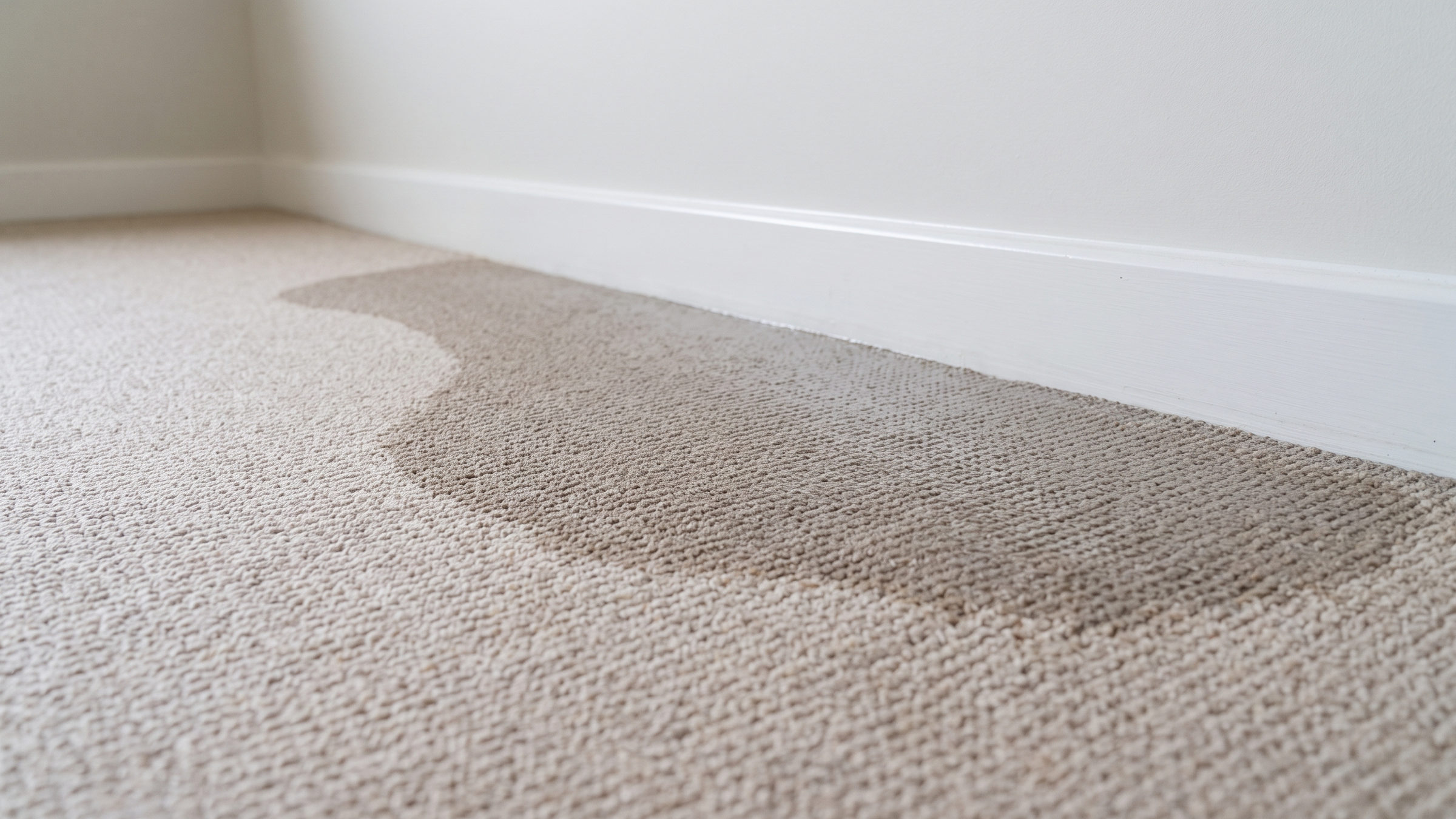
Can You Dry a Wet Carpet Yourself? Where the DIY Line Is
This article is for general information only and isn't specific advice. Every water-damage situation is different — for your circumstances, seek professional guidance.
A burst flexi-hose, an overflowing machine, or a storm that got in — and now the carpet's soaked. Before you drag out every fan in the house, it's worth asking the real question: is this one you can dry yourself, or is it past the point where DIY does more harm than good? Here's where the line sits.
The quick answer
You can usually dry a wet carpet yourself only when three things are true:
- The water is clean (a tap, a supply line, or rainwater), not from a drain or outside flooding.
- The wet area is small — roughly under 3 square metres.
- The water hasn't reached wall cavities, skirting boards, or the subfloor.
Tick all three and a careful DIY dry is reasonable — our step-by-step guide walks through it. Miss any one, and it's a job for proper drying, not a household fan.
The water you can't see
A soaked carpet is never just a wet surface. Water wicks down into the underlay — which holds far more than the carpet face — and spreads into the subfloor and up the walls; gyprock can draw moisture 30–60cm up in a couple of days. A pedestal fan moves air over the top, but it won't pull that trapped moisture out of the underlay, the timber, or a concrete slab. Dry the surface and leave the rest, and you get warped boards, lifting carpet backing, and lasting damage to the floor underneath.
Signs you're over the line
Put the mop down and get help if:
- The carpet is soaked, not just damp.
- Water has reached the walls or skirting, or gone under the floor.
- It's been wet for more than a day.
- The affected area is large, or you're not sure how far the water travelled.
Any of these means the moisture has gone somewhere a DIY setup can't reach.
"Dry to the touch" isn't the finish line
Even a carpet that feels dry on top can be wet underneath. Proper drying isn't judged by feel — it's measured with moisture meters back to the home's normal "dry standard" and documented, so you know the structure is genuinely dry and not just surface-dry. That's the part a DIY dry can't confirm. For how long that realistically takes, see our full guide to wet carpet drying.
Don't forget your insurance
There's a practical reason to get this right beyond the carpet itself. Insurers generally expect water damage to be mitigated quickly and documented. Photos of the source and the affected rooms, plus records of the drying, help support a claim; a surface-only DIY dry with no records can make things harder later. Proper drying, by contrast, is measured and documented as it goes — moisture readings tracked back to the home's dry standard rather than judged by feel.
If you're over the line
If the carpet's soaked, the water's spread, or you just want it done right, drySafe can take it from there with proper drying gear. We're fully self-serve — you book and pay online.
Book online